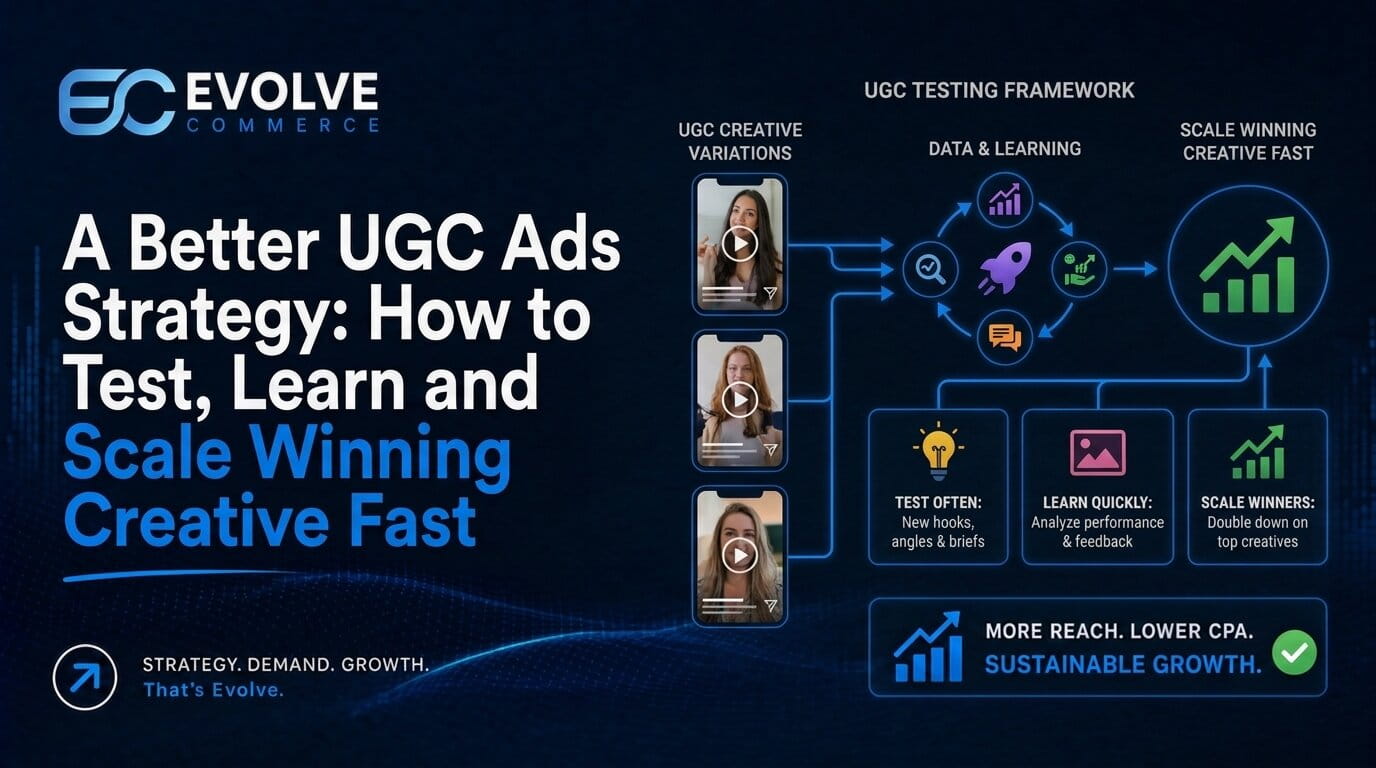
A well-structured UGC ads strategy can be one of the fastest ways to lower cost per acquisition and improve conversion, particularly when creative is managed through a disciplined test-and-scale system. Success looks like faster creative discovery, a steadier CPA curve and a repeatable pipeline rather than one-off viral luck. Platforms like TikTok and Instagram Reels reward this format, and teams that treat UGC as a performance channel, not just a brand nicety, tend to pull ahead.
- UGC ads are most effective when tested systematically with multiple hooks and formats, focusing first on short-form vertical videos for rapid testing.
- Sourcing UGC through customers, creators, or aggregation tools involves different costs, speeds, and rights management, which impacts campaign timeline.
- Clear briefing that emphasizes the hook and usage rights reduces unusable content, improving efficiency and compliance with advertising regulations.
- Success in scaling UGC ads depends on passing structured funnel tests like A/B testing and holdout validation, then increasing budgets gradually.
- Long-term value from UGC includes increased brand loyalty and organic search relevance, with tracking recommended at cohort level over time.
Table of Contents
- What counts as a UGC ad versus organic content or studio creative
- Why UGC ads tend to beat polished creative on performance metrics
- Formats worth testing first
- Sourcing UGC: customers, creators and the platforms in between
- Briefing creators and writing hooks that stop the scroll
- Testing and measurement: the funnel that separates winners from noise
- Operationalising UGC at scale without losing quality
- Staying compliant: disclosure, adoption and claims in UK advertising
- How we operationalise UGC ads for ecommerce brands
- Personalisation and targeting built around UGC assets
- Handling negative or low-quality UGC without damaging trust
- What UGC ads reveal about long-term loyalty and lifetime value
- When UGC earns the budget and when studio creative still matters
- How we help brands build a UGC ads system that scales
- FAQ
- Sources
What counts as a UGC ad versus organic content or studio creative
A UGC ad is paid media built from real or creator-shot footage that looks native to the platform feed, briefed and licensed specifically for advertising rather than posted organically and left alone. That distinction matters because a brief written for an organic post rarely covers the usage rights, mandatory shots or disclosure wording a paid campaign needs.
- Organic UGC is unpaid, posted by a customer or creator on their own account with no media spend behind it.
- Paid UGC ads are the same raw, authentic style but licensed, edited to spec and placed as advertising, often with a paid partnership disclosure.
- Studio creative is scripted, shot and produced to brand guidelines, built for polish rather than relatability.
Short-form vertical formats on TikTok and Instagram Reels suit raw UGC best, while feed placements can carry slightly more polished UGC-style stills without losing the native feel.
Why UGC ads tend to beat polished creative on performance metrics
UGC works because it lowers the guard that most people have against obvious advertising. A clip that looks like a friend’s recommendation reads as social proof rather than a pitch, which reduces scepticism before the sales message even lands. Production speed compounds the advantage: a UGC brief can be turned around in days, letting a team test far more hooks and angles than a studio shoot schedule allows.
60% of marketers consider authenticity and quality indispensable to content performance, according to the American Marketing Association’s review of UGC practice, which also links UGC to lower production costs and stronger trust signals. Platforms tend to reward native-feeling creative with better delivery, which is part of why UGC-style ads often sustain lower CPAs once a winning angle is found.
Formats worth testing first
Not every UGC format earns the same budget. Prioritise by objective rather than running everything at once.
- Short-form vertical video for top-of-funnel reach and rapid hook testing on TikTok and Instagram Reels.
- Testimonial and review clips for consideration stages, where a specific before-and-after story does the convincing.
- Unboxings and first-impression clips for product discovery, particularly for physical goods with a tactile or visual reveal.
- Static UGC stills for feed placements and dynamic creative, useful where video production capacity is limited.
Shopify’s breakdown of UGC ad types treats these four as the core set worth testing before expanding into more niche formats.
Sourcing UGC: customers, creators and the platforms in between
Three sourcing routes cover most needs, and they are not mutually exclusive.
- Customer-driven sourcing uses branded hashtags, review incentives and submission forms, moderated for quality and consent before any footage reaches a paid campaign.
- Creator-driven sourcing means briefing specialist UGC creators or using a creator marketplace when customer supply is thin or a specific hook needs scripting. Guidance on separating UGC creators from influencers is useful here, since the two roles are often budgeted and briefed differently.
- Aggregator and curation tools pull submissions into one library, tag them by product or theme, and flag usage rights status automatically.
The trade-offs are predictable: customer content is cheap but slower to arrive at volume, creator content is faster and more consistent but carries a fee and usually an exclusivity or usage-window clause. Shopify’s sourcing process treats rights clearance as a non-negotiable step before any format or platform work begins.
Briefing creators and writing hooks that stop the scroll
A brief is a production document, not a wish list, and it should give a creator everything needed to shoot without back-and-forth.
- State the objective: awareness, consideration or direct response changes everything else in the brief.
- Define the audience in plain terms the creator can picture, not a demographic slide.
- List deliverables: number of cuts, aspect ratios, caption requirements.
- Confirm usage rights: which platforms, how long, organic and paid, and in which regions.
- Specify mandatory shots and the hook requirement, since the opening line or frame carries most of the weight.
- Set a timeline with a buffer for one round of revisions.
Hook patterns worth testing include a direct problem statement (“I almost returned this until…”), a visual surprise in the first second, or a blunt opinion stated as fact. Platform guidance cited by Shopify notes that most ad recall is captured in the first few seconds, which is why the hook deserves more brief detail than any other shot.
Pro Tip: Give creators a locked hook requirement but leave wardrobe, setting and delivery style open, since forced authenticity reads as scripted and undermines the format’s main advantage.
Testing and measurement: the funnel that separates winners from noise
A UGC ad only earns scale budget after it survives a structured funnel, not after one good day of spend.
- Angle discovery: run several distinct hooks against a small, consistent budget to see which concept gets attention.
- A/B testing: isolate one variable at a time, hook, thumbnail or caption, against the surviving angles.
- Holdout validation: confirm the winning asset holds its performance against a fresh audience segment before committing real budget.
- Scale: increase spend in small increments rather than doubling overnight, which avoids the delivery reset that kills early momentum.
Track watch time and click-through rate as early signals, then conversion rate, cost per acquisition and incremental lift as the metrics that justify scaling. Shopify’s testing framework also flags creative decay as a real risk: rotate fresh hook variants on a rolling basis rather than running a single winner until it exhausts its audience. Our AdWize dashboard is built to track exactly this kind of creative-level metric against revenue outcomes, which keeps testing decisions grounded in numbers rather than gut feel.
Operationalising UGC at scale without losing quality
Once a handful of formats prove themselves, the bottleneck shifts from ideas to production capacity. A content ops pipeline, intake, moderation, editing, tagging, library, keeps that flow steady rather than reactive.
- Intake: a single submission form or creator portal that timestamps every asset and consent record.
- Moderation: a review step that checks brand safety and claims accuracy before anything reaches an ad account.
- Edit and format: tools like CapCut and Canva cover most resizing, captioning and quick-cut needs without a full production team.
- Tagging and library: every asset tagged by product, hook type and performance history so winning patterns are easy to find again.
AI-assisted editing tools can speed up variant creation, including AI-generated creator-style ads, though Adobe’s own coverage of UGC-style AI tools is clear that governance matters: synthetic content still needs the same authenticity and compliance checks as footage from a real customer.
Pro Tip: Build a tagging taxonomy before volume grows, since retrofitting a library of hundreds of clips later costs far more time than setting it up early.
Staying compliant: disclosure, adoption and claims in UK advertising
UK rules apply the moment UGC is used in paid advertising, and ignorance of a creator’s incentive is not a defence.
- The ASA’s influencer guidance requires clear, prominent, upfront disclosure whenever a creator receives any incentive, with labelling visible on mobile rather than buried in a bio or hashtag.
- The ASA’s remit guidance on social media confirms that UGC “adopted and incorporated” into brand marketing falls under the CAP Code, and that publishing only positive reviews while suppressing negative ones can bring that content under full advertising rules.
- Keep permission forms, consent timestamps and a one-page rights schedule per creator covering platform, duration and geography.
- Flag age-restricted or health-adjacent products for extra claims review before any UGC clip touches a paid account.
How we operationalise UGC ads for ecommerce brands
We manage paid media and creative production as one connected system rather than separate workstreams, so a UGC asset’s performance data feeds directly back into briefing and targeting decisions. We aim to build interconnected revenue systems across channels, using advanced analytics to keep visibility and decision-making accountable rather than guesswork.
- Treat every UGC asset as a tracked data point, not a one-off creative.
- Connect creative-level performance to revenue, not just click metrics.
- Run structured test cycles before committing retainer budget to any single angle.
- Keep rights and disclosure documentation centralised against every live asset.
Personalisation and targeting built around UGC assets
UGC ads respond well to segmented targeting because the format itself can mirror different audience segments without a full reshoot. A clip featuring a customer with a specific skin concern, body type or use case can be matched to lookalike audiences who share that profile, which tightens relevance far more than a generic product video would.
Dynamic creative setups on Meta and TikTok let a handful of UGC variants rotate automatically based on audience signals, so a first-time visitor might see an unboxing clip while a cart abandoner sees a testimonial addressing a specific objection. This only works when the asset library is tagged well enough to match creative to audience intent, which is another reason tagging deserves attention early rather than as an afterthought.
Retargeting sequences benefit particularly from UGC because the format tolerates repetition better than polished ads do. A viewer who has seen a studio ad twice tends to tune it out faster than one who sees a different customer’s story each time, since each UGC clip still reads as a new piece of social proof even when the underlying message repeats.
Geographic and demographic personalisation also matters for sourcing decisions, not just delivery. Briefing creators who reflect the audience a campaign is actually targeting, in language, setting and product use case, tends to outperform a single generic creator brief rolled out across every segment.
Handling negative or low-quality UGC without damaging trust
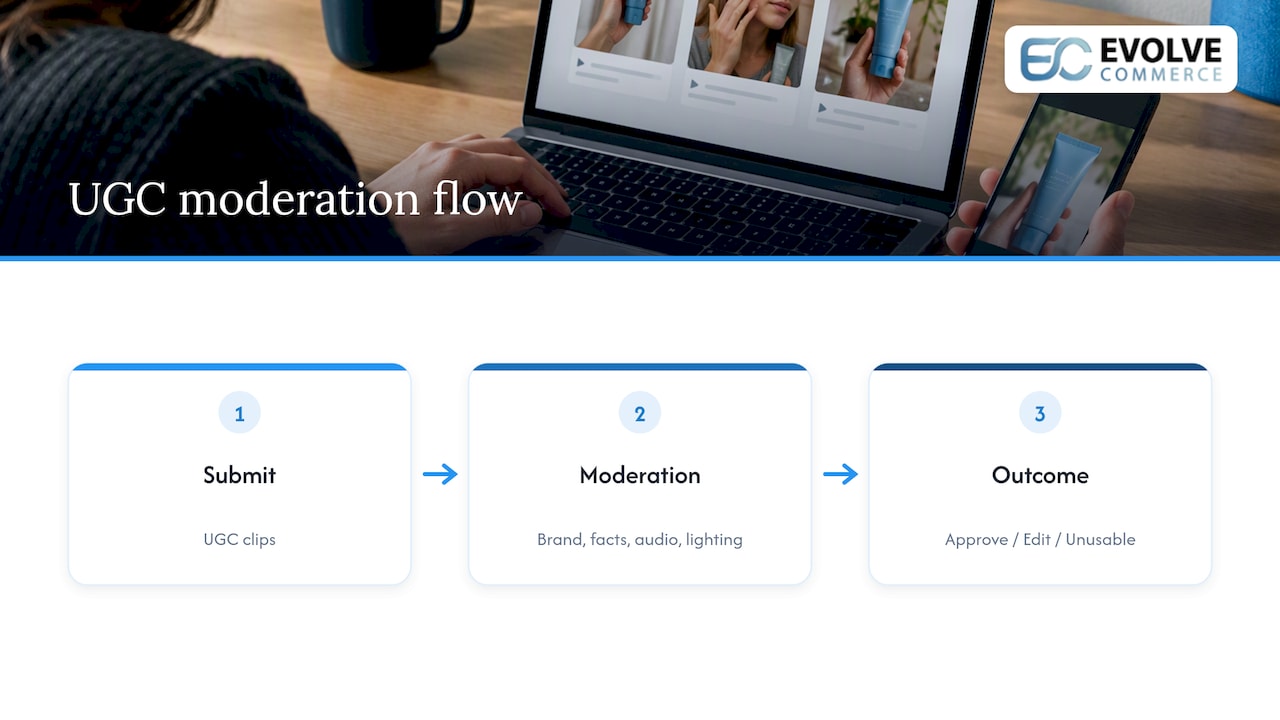
Not every submission is usable, and treating a flood of mediocre content as equally valuable wastes both production time and ad spend. A moderation step before any clip reaches an ad account should screen for brand safety, factual accuracy and basic production quality, audio clarity and lighting matter more than polish, but unwatchable footage still needs filtering out.
Negative UGC, an unprompted critical review or comment thread, is trickier. Suppressing it entirely carries regulatory risk: the ASA’s guidance on adopted UGC notes that publishing only favourable content while hiding negative reviews can pull that content under full advertising scrutiny. The safer approach is addressing legitimate criticism in product or service improvements rather than erasing its trace from public view.
Low-quality content that is simply unusable for ads, rather than negative, is a production problem, not a compliance one. Building clear mandatory-shot requirements into briefs from the outset reduces the rate of unusable submissions, since creators who understand exactly what a shot needs produce footage that is far more likely to clear moderation on the first pass.
Keeping a clear line between “needs editing” and “unusable” also saves ops time. A clip with a weak hook but strong product footage might be worth re-cutting with a different opening line, while a clip with poor audio or lighting is rarely worth the editing effort it would take to save.
What UGC ads reveal about long-term loyalty and lifetime value
Short-term metrics like CPA and conversion rate tell you whether a UGC ad works in the moment, but they say little about whether it builds lasting customer relationships. Tracking repeat purchase rate and customer lifetime value among buyers acquired through UGC campaigns, compared with those acquired through studio creative, gives a clearer picture of whether the format is building trust or just capturing a single transaction.
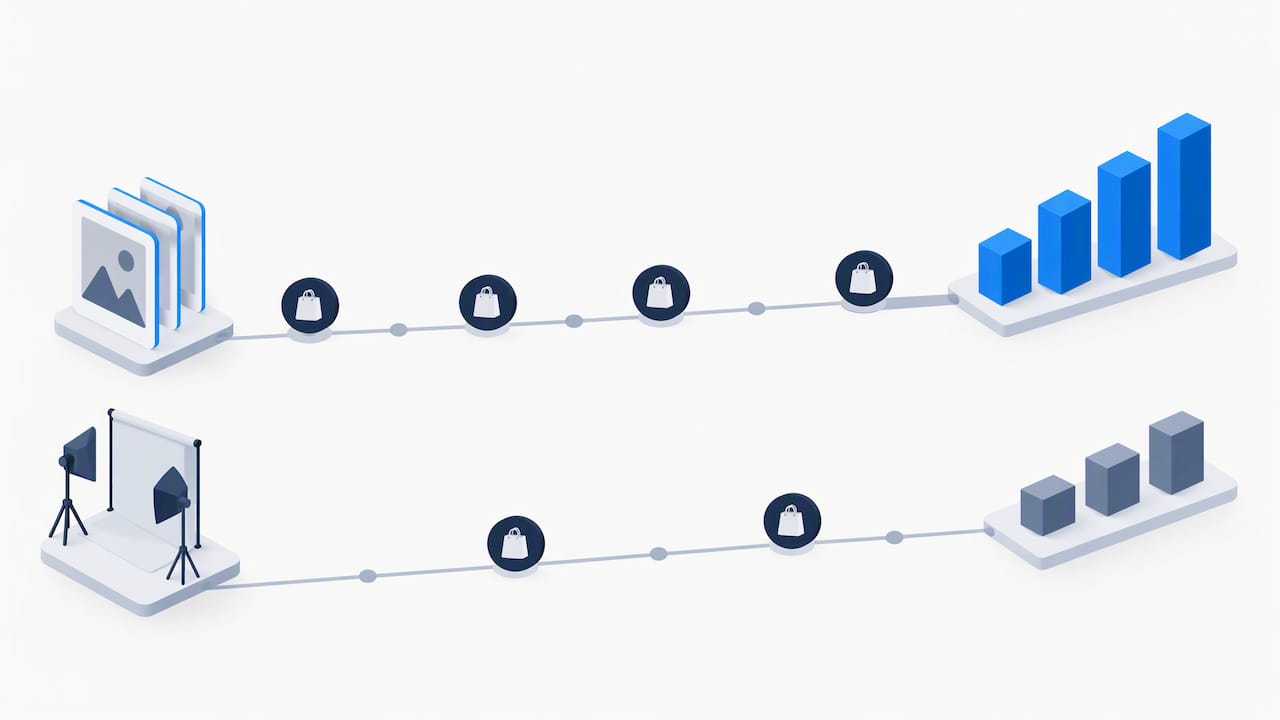
Brands that feature real customers in paid creative also tend to see a secondary effect: the customers featured, and often their immediate network, become more engaged with the brand afterwards, since being featured functions as a form of recognition. This is harder to measure directly than a click-through rate, but it shows up over time in repeat engagement and referral behaviour tied back to campaign source.
Reviews and comments generated through UGC campaigns also compound over time in ways paid media alone does not. The American Marketing Association’s review of UGC notes that authentic user content can improve organic search visibility by adding fresh language and longer page dwell time, which means a single strong UGC asset can keep contributing to acquisition long after its paid flight ends.
The practical takeaway is to track cohort-level lifetime value by acquisition creative type, not just campaign-level CPA, and revisit that data quarterly rather than only at campaign close. A format that looks marginally more expensive on day one CPA can still be the better long-term investment if its customers retain at a meaningfully higher rate.
When UGC earns the budget and when studio creative still matters
UGC should be the default for performance campaigns chasing conversion and fast iteration. Studio creative still earns its place for brand positioning, complex product demonstrations and premium categories where polish signals quality. A sensible split lets UGC carry most of the testing budget, with studio work reserved for hero campaigns and categories where raw authenticity undersells the product.
— Evolve Commerce
How we help brands build a UGC ads system that scales
We manage paid media, performance creative production and analytics as one connected engine rather than separate line items, which means a UGC asset’s test results feed straight back into briefing, targeting and budget decisions without weeks of manual reporting in between.
If a structured UGC testing system sounds like the missing piece in your current setup, our AdWize analytics platform is worth a look, with Starter, Accelerator and Scale plans priced at £49, £149 and £249 per month. For a fuller view of where your current creative and media setup stands, you can request our 360° Marketing Audit and see where a tighter UGC pipeline would move the numbers.
FAQ
Is UGC still a thing in 2026?
Yes, UGC remains a core performance creative format, with platforms continuing to favour native-looking content in both organic and paid placements. Marketers increasingly treat it as a tested, measurable channel rather than a one-off trend.
What is UGC in ads?
UGC in ads refers to content that looks like a real customer or creator post, customer footage, reviews or unboxings, licensed and run as paid media rather than left as organic posts. It is briefed, edited to platform spec and usually carries a disclosure label when a creator has been compensated.
Are UGC ads legal?
UGC ads are legal, but UK rules require clear, prominent and upfront disclosure whenever a creator has received any incentive, and content that a brand has adopted and incorporated into its marketing falls under the CAP Code. Suppressing negative reviews while publishing only positive ones can also bring UGC under full advertising scrutiny.
How much does an UGC ad cost?
Cost varies widely depending on whether content comes from customers, incentivised with a small reward, or from commissioned creators charging a fee per clip plus usage rights. There is no fixed industry rate, so budgets should be set per sourcing route and reviewed against the testing results each asset produces.
How do I know when a UGC ad is ready to scale?
An asset is ready to scale once it has passed angle discovery, survived A/B testing against other hooks and held its performance in a holdout validation against a fresh audience. Shopify’s testing framework recommends small, incremental budget increases at this stage rather than doubling spend in one move.
Sources
- UGC Content 101: A Comprehensive Introduction
- 4 types of UGC ads and how to collaborate on UGC ads (Shopify)
- Influencers’ guide to making clear that ads are ads (ASA)