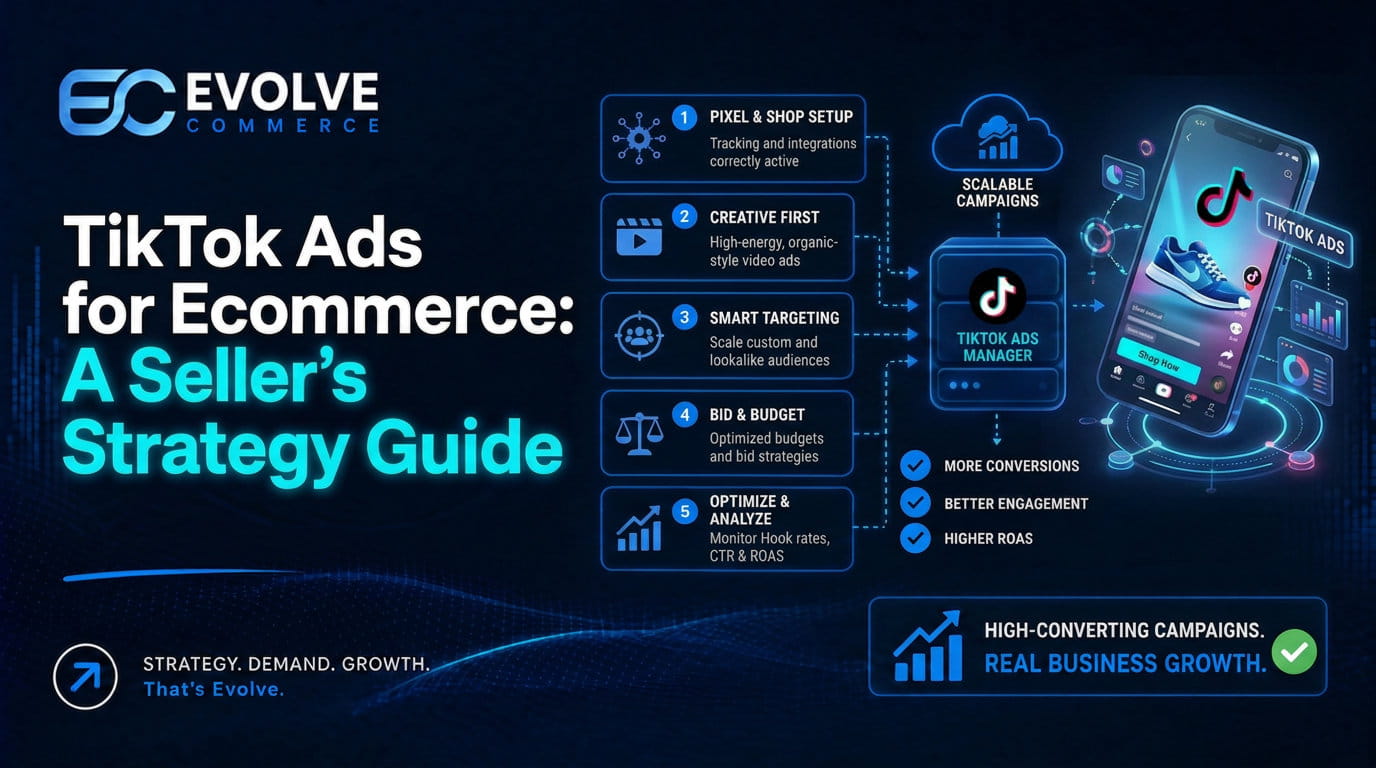
TikTok ads for ecommerce work when three things line up: a product that can be understood in seconds, native-feeling vertical video, and tracking that tells you which sales the platform actually drove. For UK brands there are two routes to sell: send shoppers from ads to your own website, or sell inside TikTok Shop. Most brands end up running both, so this guide covers how each works, how to set up campaigns, which creative and targeting choices to make first, and how to measure results.
- TikTok has two ecommerce routes: ads that drive traffic to your own site, and TikTok Shop, where buyers check out without leaving the app.
- Check product fit first. Products with clear visual proof that can be explained in one short clip are the strongest candidates.
- Start with broad targeting, vertical video that looks native to the feed, and a small number of campaign changes so the algorithm can learn.
- Install the TikTok Pixel with standard ecommerce events, and add server-side tracking if you want cleaner data.
- Budget around creative volume and testing rather than bids. Costs vary by sector, season and creative quality, so build your own benchmarks.
Table of Contents
- How TikTok ecommerce works for UK brands
- Is TikTok right for your products and goals?
- Checking TikTok Shop requirements for the UK
- Setting up a TikTok ecommerce ad campaign
- Targeting that gives the algorithm room to learn
- Creative: what separates ads that sell from ads that get skipped
- Measuring TikTok ad performance
- What TikTok ads cost in the UK
- Our perspective
- A 30-day TikTok launch plan
- How Evolve Commerce can help
- FAQ
- Sources
How TikTok ecommerce works for UK brands
TikTok ecommerce is the combination of paid advertising, organic and creator content, and in-app selling. TikTok Shop lets buyers discover products in videos, livestreams or a shop tab and buy without leaving the platform. Alongside it, TikTok Ads Manager runs the paid side: you choose an objective, set a budget and bid, and organise activity into campaign, ad group and ad levels.
In practice that gives you three ways to put products in front of people:
- Traffic and conversion ads to your website. The ad sends the viewer to your product page, and the Pixel records what happens next.
- Shop ads. These link directly to products in TikTok Shop, so the purchase happens in the app.
- Automated Shop campaigns. Gross merchandise value (GMV) focused campaigns where, after you set a daily budget and a return target, TikTok decides creative, audience and spend distribution.
Which route suits you depends on your margins, your fulfilment set-up and how much you want to own the customer relationship. Selling on your own site keeps first-party customer data, email and SMS capture and your own basket logic. Selling in TikTok Shop shortens the path to purchase and taps into creators and livestreams. Brands with a strong website and lifecycle marketing often lead with site-driven ads and add Shop once the creative is proven.
Is TikTok right for your products and goals?
Before you spend, run a quick product readiness check. Products that suit TikTok tend to show their value visually: a before and after, a demonstration, a transformation, a satisfying detail. A useful rule of thumb is whether a stranger can understand the product and want it within roughly 10 to 30 seconds. Products that need long explanation, technical comparison or a lengthy consideration period are harder to sell in a single short clip, though they can still work with a different role for TikTok, such as awareness feeding retargeting.
Ask five questions:
- Can the product be shown working? Demonstration beats description.
- Is the price point impulse-friendly, or does it need nurturing? Higher-ticket products often need a longer funnel with email and retargeting behind the first view.
- Is your margin enough to carry testing? Early campaigns buy learning, not just sales.
- Can you produce fresh video regularly? Creative fatigue is the main constraint on scaling.
- Can your stock and delivery handle a spike? Viral moments punish brands that run out of stock.
If you can answer yes to most of these, TikTok deserves a structured test. If the answer is mixed, start with a narrow product range, the hero lines that best pass the visual test, rather than your whole catalogue.
Checking TikTok Shop requirements for the UK
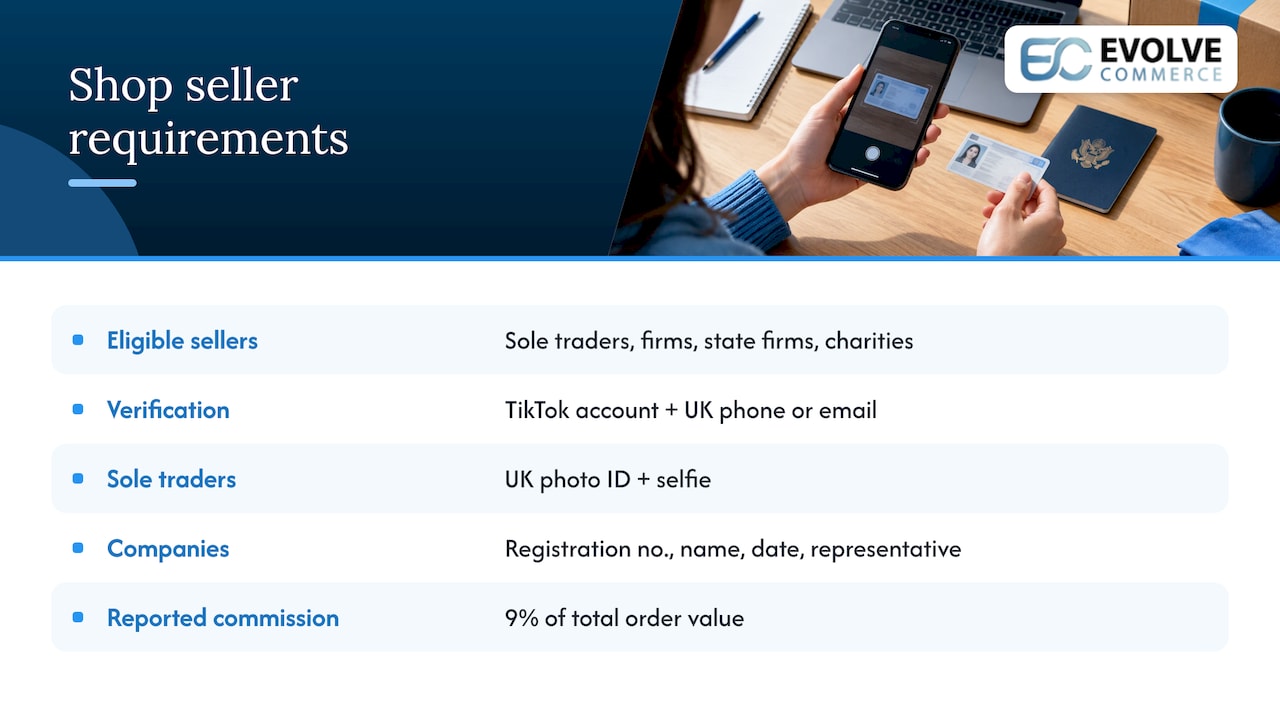
If you plan to sell in-app, confirm the eligibility details before building campaigns around it. On TikTok’s own seller pages, UK registration is open to sole traders, privately owned and publicly listed businesses, state-owned businesses and charities. All sellers need a TikTok account and a UK phone number or email for verification. Sole traders provide UK-issued government photo ID plus a selfie with it, while companies provide the company registration number, full legal name, registration date and authorised representative details.
On costs, check the current fee schedule inside Seller Center because it changes. A third-party UK set-up guide reports a standard commission of 9% of total order value, a reduced rate for some categories and for new sellers during onboarding, and per-order fulfilment fees that depend on whether you ship yourself or use TikTok’s fulfilment. Treat those as a planning guide, then confirm the numbers in your own Seller Center before you model margins.
Build the margin model on the real fee stack: commission, fulfilment, returns, creator commissions if you use affiliates, and the ad spend needed to generate each order. A product that looks profitable on a website can look very different once Shop commission is added.
Setting up a TikTok ecommerce ad campaign
Keep the first structure simple. Ads Manager runs on an auction, so your bid, budget and the quality of your creative decide how often you are shown and at what cost.
Choose the objective that matches the route
For site sales, a website conversions objective is the usual starting point. For Shop, there is an objective built for TikTok Shop sales. Awareness and traffic objectives have a role at the top of the funnel, but if sales are the goal, optimise for a purchase-related event as soon as there is enough volume.
Walk the event ladder
New accounts rarely have enough purchase data to optimise on day one. TikTok’s UK holiday guidance suggests a staged approach: optimise for Add to Cart first, monitor those conversions, and only add a Complete Payment ad group if you see at least one conversion in the first week. It is a 2023 playbook, so use it as a sensible sequence rather than a fixed rule, and move to purchase optimisation as soon as your data supports it.
A simple launch structure
- One campaign per objective, so budgets and learning stay clean.
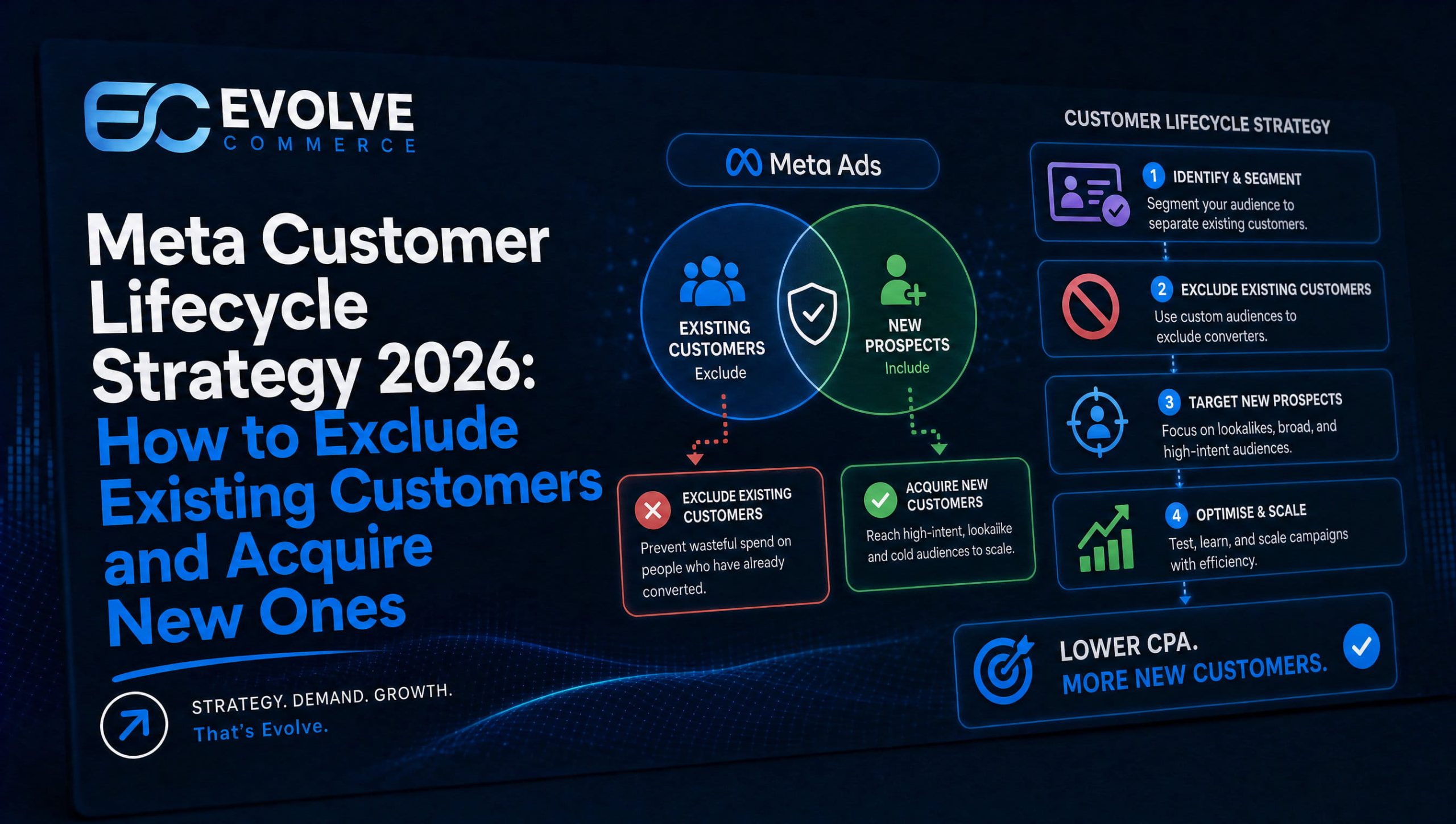
- Two or three ad groups: broad prospecting, plus a retargeting group built from site visitors and engaged viewers.
- Three to five distinct creative concepts per ad group, each with its own hook, rather than five minor edits of one video.
- A budget that lets each ad group gather conversions, not one that spreads thin across many.
Avoid constant tinkering. The same guidance recommends changing targeting, bidding, budget or tracking no more than once every two days so delivery can stabilise. Log every change with a date so you can connect shifts in performance to what you did.
Targeting that gives the algorithm room to learn
The instinct to carve out narrow interest segments often works against you on TikTok. Broad audiences tend to perform better than narrow ones because the system needs data to find buyers, and creative does much of the targeting work for you. Start wide, let the first results build custom and lookalike audiences, then layer retargeting on top for people who viewed content, added to basket or started checkout.
The same logic applies to the wider channel mix. A creator-led view of the split, with TikTok for reach and Instagram for conversion, is a useful way to think about where each platform sits in a funnel, and it is a reason to make sure retargeting audiences exist on the platforms where shoppers finish their purchase.
A few practical rules for targeting:
- Begin broad on age and location within the UK, and add exclusions for existing customers where it matters.
- Let creative signal the audience: a hook that names a problem or a use case filters viewers for you.
- Keep prospecting and retargeting in separate ad groups so you can read each one honestly.
- Refresh audiences from first-party data as your customer list grows.
Creative: what separates ads that sell from ads that get skipped
Creative is the largest lever in TikTok performance. The platform rewards ads that look like they belong in the feed: vertical video, real people, current formats and a tone that feels authentic and relatable, with awareness of in-app trends and hashtags rather than polished broadcast-style adverts.
A workable structure for a short ecommerce video:
- Hook (first 1 to 3 seconds). A problem, a surprising result or a bold visual. If this fails, nothing else matters.
- Proof. Show the product working, in use, on a real person, in a real setting.
- Benefit and offer. One clear reason to buy, and one clear incentive if you have one.
- Call to action. Tell the viewer exactly what to do next.
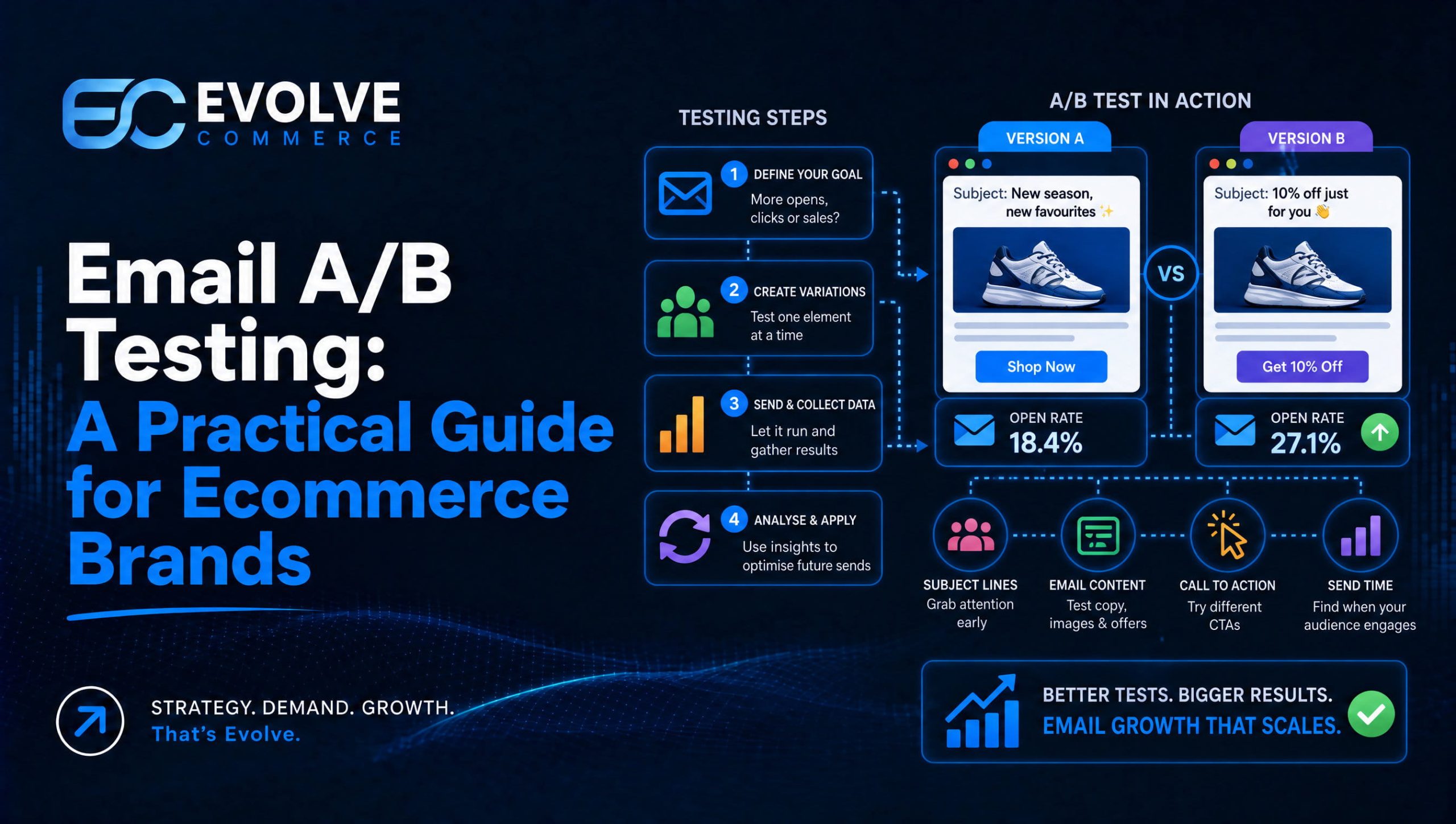
Treat creative as a testing programme. Change one element at a time: the hook, the creator, the opening shot, the length, the offer. Keep a simple log of which hooks and formats win, then brief the next batch from it. Our guide to a better UGC ads strategy sets out how to test, learn and scale winning creative quickly, and the same approach applies directly to TikTok.
Volume matters too. Ads fatigue quickly on TikTok, so plan for a steady pipeline of new variations rather than one big shoot. Many brands combine creator content, in-house filming and AI-assisted editing to produce variants at a pace manual editing cannot match.
Measuring TikTok ad performance
TikTok ads are only as optimisable as the signals you send back. The TikTok Pixel records website events and uses them to measure traffic and campaign performance, optimise delivery, build custom audiences and measure ROAS against defined conversion events. The standard ecommerce events include View Content, Add to Cart, Initiate Checkout and Complete Payment.
Tracking checklist
- Install the Pixel on every page and confirm each standard event fires once, with the right value and currency (GBP for UK stores).
- Add server-side event sending alongside the browser Pixel to recover signals lost to browser restrictions and consent choices.
- If you run both, send the same event name and the same event ID for the same action so the platform treats browser and server events as one conversion and does not double count.
- Respect UK consent requirements: your cookie banner and consent mode need to control when tags fire.
- Compare platform-reported sales with your own order data weekly.
Reading the numbers
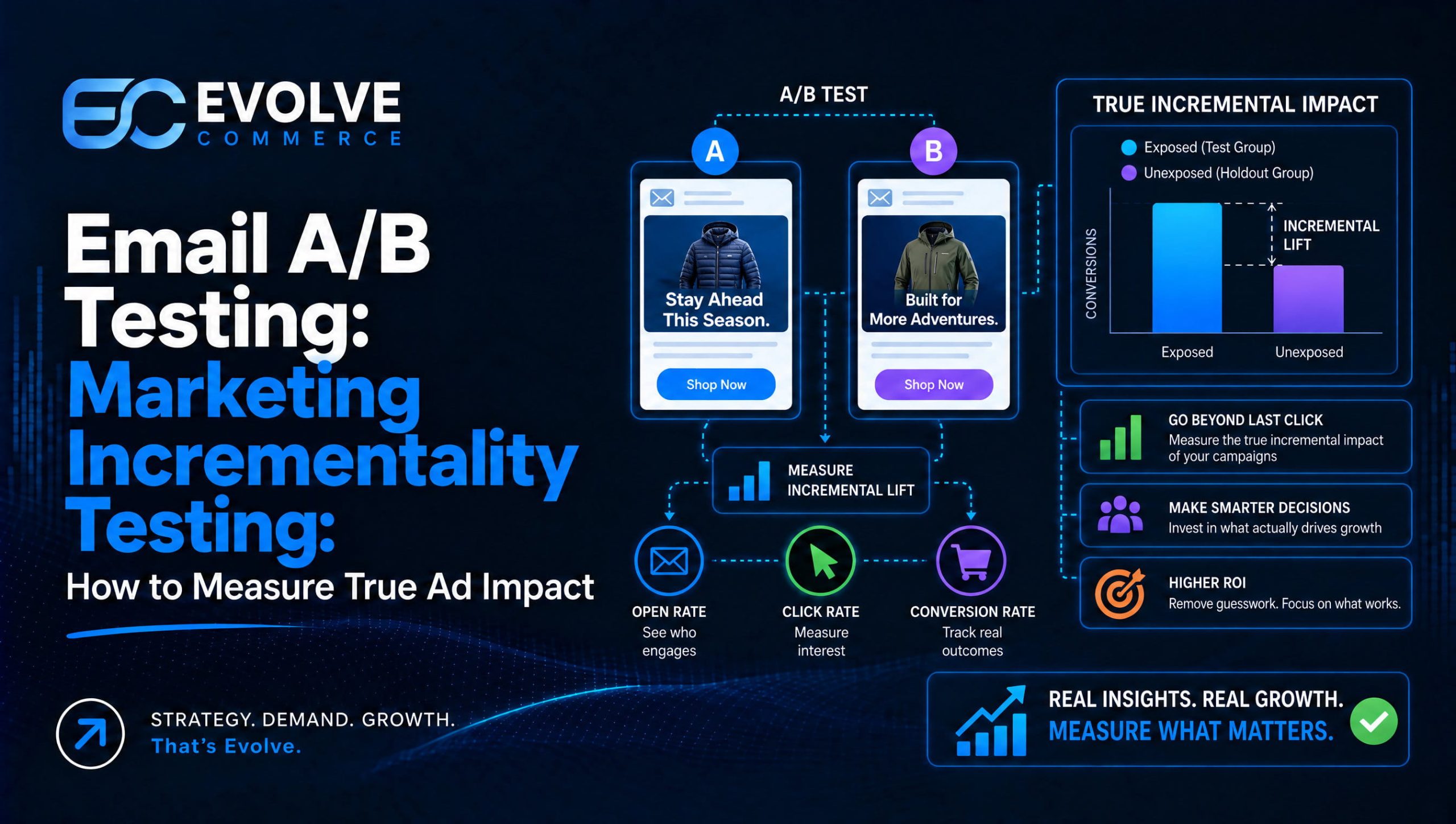
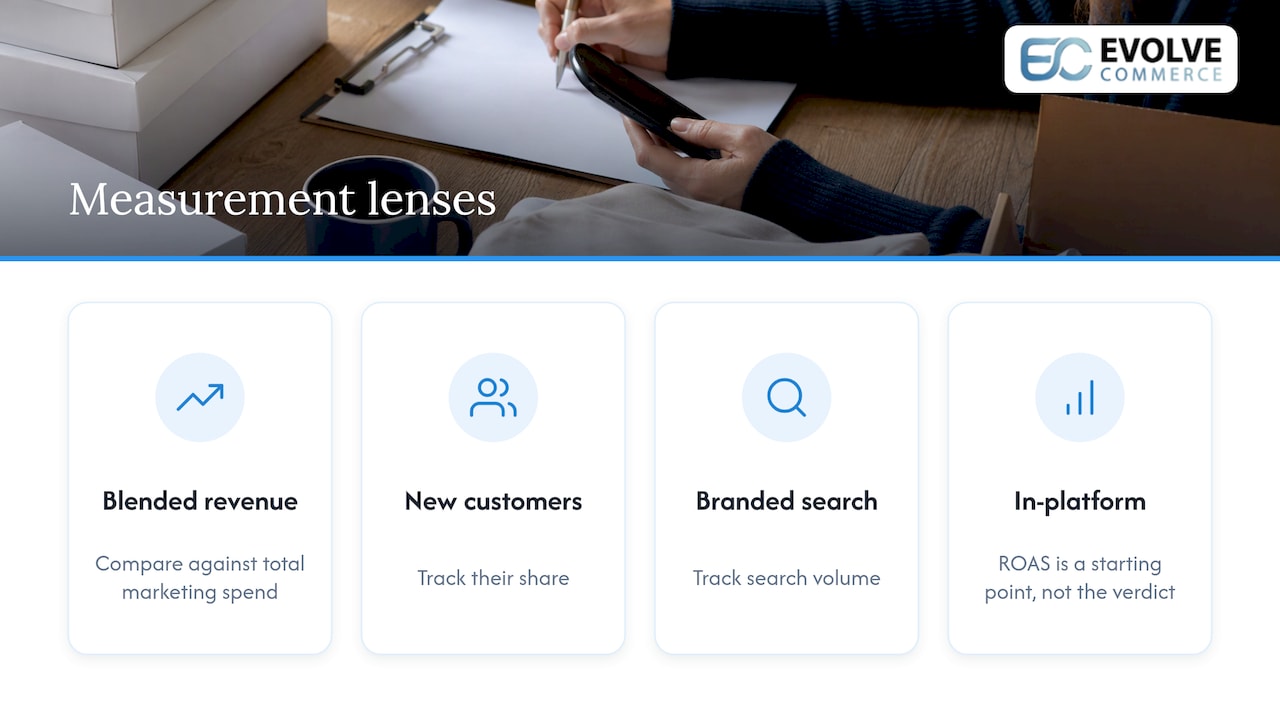
Platform-reported ROAS is a starting point, not the final verdict. TikTok often influences purchases that complete later, on another device or through another channel, so last-click numbers can understate it. Look at blended revenue against total marketing spend, new customer share and branded search volume alongside in-platform results. For a rigorous read on whether spend is creating sales that would not have happened anyway, see our guide to marketing incrementality testing. For the dashboard side, marketing dashboard metrics for ecommerce covers how to turn these numbers into budget decisions.
What TikTok ads cost in the UK
Cost per 1,000 views, or CPM, is the figure most people ask about, but there is no single UK number worth quoting. Published averages differ widely between sources, measurement periods and sectors, and they move with seasonal demand: the run-up to Christmas and Black Friday typically brings more competition in the auction. Instead of anchoring on someone else’s benchmark, work from what drives your own cost:
- Creative quality. Ads that hold attention are rewarded with cheaper delivery and better results.
- Audience size and competition. Broad audiences give the system more room, while crowded categories cost more.
- Objective and optimisation event. Optimising for purchases usually costs more per result than optimising for clicks, but the results are closer to revenue.
- Season. Peak retail periods raise auction pressure.
- Landing page and offer. These affect conversion rate, and so the cost of each sale, even when CPM is unchanged.
The number to manage is not CPM but cost per acquisition against your margin. Work backwards: take gross margin per order, decide how much you can afford to spend to win a customer, and compare it with what the test returns. Set a test budget that can produce enough conversions to learn from, and check the current minimum budgets in Ads Manager, since they are set by the platform and can change.
Our perspective
Most brands treat TikTok as a place to post a few videos and see what happens. We treat it as one part of a connected revenue system.
The brands that scale on TikTok are rarely the ones with the largest budget. They are the ones that connect creative testing to clean measurement. When creative production, paid media and analytics run as one loop, every ad teaches the next brief. Winning hooks are identified quickly, losing concepts are cut early, and spend moves to what drives revenue.
That is why we build campaigns alongside performance creative production, lifecycle email and SMS, and analytics. A TikTok viewer who does not buy on the first visit should land in a retargeting audience and a Klaviyo flow, not disappear. Our AdWize platform brings server-side attribution and AI-powered insights together so that decisions are based on the whole picture rather than a single platform’s report.
Our approach is designed to give ecommerce brands accountability: what you spent, what it produced, and what to do next.
Evolve Commerce
A 30-day TikTok launch plan
Use this as a structure for a first test, adjusting the specifics to your catalogue and budget.
Week 1: foundations.
- Pick two to four products that pass the visual test.
- Set up the Pixel and server-side events, and check deduplication.
- Brief and produce the first batch of three to five creative concepts, with two hook variants each.
- Confirm your margin model, including any TikTok Shop fees.
Week 2: launch and learn.
- Launch broad prospecting with conversion-led optimisation, starting with Add to Cart if purchase volume is low.
- Set up a retargeting ad group once you have enough site traffic.
- Limit changes to once every two days and record each one.
Week 3: cut and iterate.
- Turn off concepts with weak hold rates and poor click-through.
- Brief a second creative batch based on the winning hooks.
- Move to purchase optimisation if the data supports it.
Week 4: review and scale.
- Compare platform results with your own order data.
- Raise budgets gradually on what is working rather than in large jumps.
- Decide whether to add TikTok Shop or creator affiliates as the next step.
How Evolve Commerce can help
If you want TikTok to sit inside a wider growth system rather than a stand-alone experiment, we manage paid media across TikTok, Meta, Google and other platforms, produce performance creative, and connect it all to email, SMS and analytics. Our AdWize analytics platform is available on published plans: Starter at £49 per month, Accelerator at £149 per month and Scale at £249 per month, with full details on the AdWize page.
To see how a joined-up approach has worked for other ecommerce brands, browse our case studies, or talk to us about a 360° Marketing Audit to find where your current spend is leaking.
FAQ
How does TikTok ecommerce work?
TikTok ecommerce combines advertising, creator and brand content, and in-app selling. Buyers can discover products in videos, livestreams or the shop tab and check out without leaving the app, or click an ad through to your own website. Ads Manager handles the paid side, and the Pixel records what happens afterwards.
How much do TikTok ads cost per 1,000 views?
There is no fixed UK figure, because CPM depends on your creative, audience, objective and the time of year. Peak retail periods tend to be more competitive. A better planning metric is cost per acquisition against your gross margin, which you can establish with a modest test budget in Ads Manager.
Is TikTok Shop the same as TikTok ads?
No. TikTok Shop is the in-app selling channel, with its own seller registration, commission and fulfilment options. TikTok ads are paid placements that can send people to your website or to your Shop products. Many brands use ads to amplify the products they sell in Shop.
What targeting should I use for TikTok ecommerce ads?
Start broad and let creative do the filtering, because the algorithm needs data to optimise. Once you have results, build custom and lookalike audiences and run retargeting separately. Keep changes infrequent so delivery can stabilise.
What do I need to track TikTok sales properly?
Install the TikTok Pixel with standard events such as View Content, Add to Cart, Initiate Checkout and Complete Payment. Add server-side events if you can, using matching event names and IDs to avoid double counting. Then check platform figures against your own order data.
Sources
- TikTok for Business: The 2026 Guide for Shopify Sellers
- TikTok Ads in 2026: Strategy, Costs and Best Practices
- How to register as a TikTok Shop seller (UK)
- How to Set Up a TikTok Shop UK Account
- TikTok Holiday and End of Year Playbook
- TikTok Pixel Destination documentation
- Brief Creators Right: TikTok to Reach, Instagram to Convert